
Trade-offs in telemetry tag programming for deep-diving cetaceans: data longevity, resolution, and continuity.
Animal Biotelemetry. 2023.
11:23
More details
Collapse details
Date Published:
Publication:Ocean:Region:Species:Methods:
- May 29, 2023
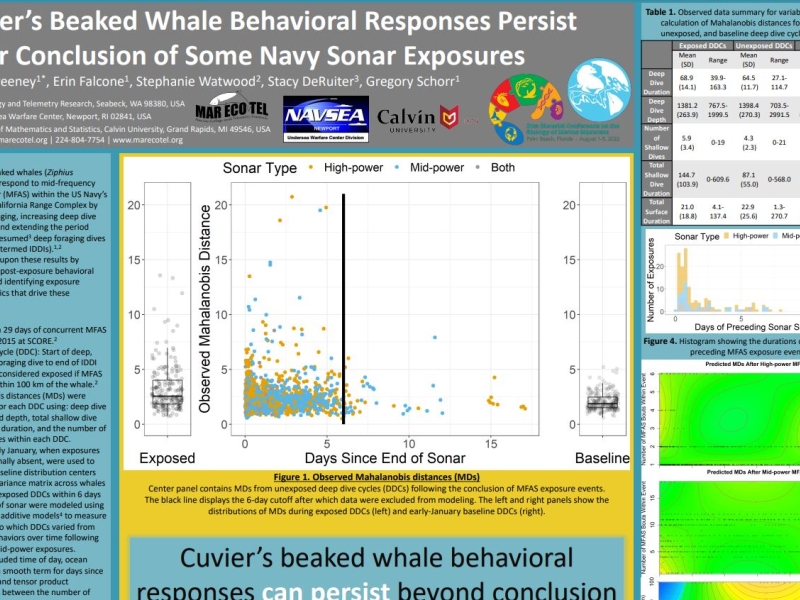
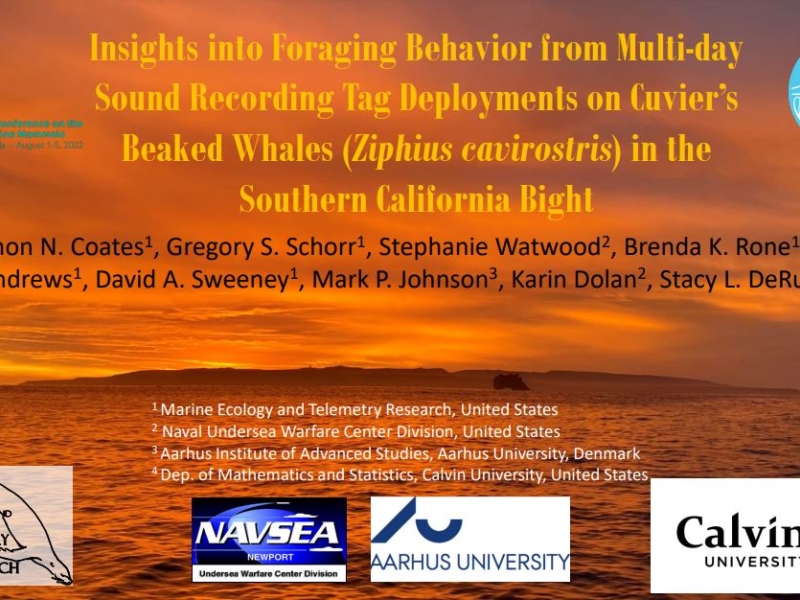
We analyze trade-offs in the longevity, resolution, and continuity of data records from non-recoverable satellite-linked tags on deep-diving Ziphius cavirostris in the context of a behavioral response study of acute noise exposure.
Kernel density estimation of conditional distributions to detect responses in satellite tag data.
Animal Biotelemetry. 2022.
10(1):1-15
More details
Collapse details
Date Published:
Publication:Ocean:Region:Species:Methods:
- September 27, 2022
To identify possible behavioral responses in dive data collected from satellite-linked time–depth recorders, and to inform the selection and parameters for subsequent individual and population-level response analyses, we propose to use kernel density estimates of conditional distributions for quantitative comparison of pre- and post-exposure behavior.
An at-sea assessment of Argos location accuracy for three species of large whales, and the effect of deep-diving behavior on location error.
Animal Biotelemetry. 2020.
10.1186/s40317-020-00207-x
More details
Collapse details
Date Published:
Publication:Ocean:Species:Methods:
- June 7, 2020
Argos satellite telemetry is used globally to track terrestrial and aquatic megafauna, yet the accuracy of this system has been described empirically only for a limited number of species. We used Argos-linked archival tags with Fastloc GPS deployed on free-ranging sperm (Physeter macrocephalus), blue (Balaenoptera musculus), and fin (B. physalus) whales to derive empirical estimates of Argos location errors for these species, examine possible behavior-related differences, and test the effect of incorporating species-specific error parameters on performance of a commonly used movement model.
A satellite-linked tag for the long-term monitoring of diving behavior in large whales.
Animal Biotelemetry. 2022.
10:26
More details
Collapse details
Date Published:
Publication:Ocean:Region:Species:Methods:
- August 22, 2022
Despite spending most time underwater, the technology in use to track whales over large geographic ranges via satellite has been largely limited to locational data, with most applications focusing on characterizing their horizontal movements. We describe the development of the RDW tag, a new Argos-based satellite telemetry device that incorporates sensors for monitoring the movements and dive behavior of large whales over several months without requiring recovery. Based on an implantable design, the tag features a saltwater conductivity switch, a tri-axial accelerometer, and an optional pressure transducer, along with onboard software for data processing and detection of behavioral events or activities of interest for transmission.
Dispersal, revisitation, and residency of satellite-tagged blue and fin whales in the Eastern North Pacific Ocean.
Animal Biotelemetry. 2025.
13(43)
More details
Collapse details
Date Published:
Publication:Ocean:Region:Species:Methods:
- December 9, 2025
We conducted a comparative analysis of movement strategies in blue (Balaenoptera musculus) and fin (B. physalus) whales across the eastern North Pacific (ENP). We assessed patterns of dispersal, revisitation, and residency within the California Current Ecosystem (CCE), a key seasonal feeding habitat, while considering biases in telemetry data such as device longevity, site fidelity, and sample representativeness. The dataset comprised 271 tracks from 176 blue and 95 fin whales tagged between 1994 and 2018 with two types of implantable tags. Tagging locations were grouped into southern California (SCA) and central-northern California (CCA–NCA) for blue whales, and SCA and central California-Pacific Northwest (CCA–PNW) for fin whales.
Mind the gap – optimizing satellite tag settings for time series analysis of foraging dives in Cuvier’s beaked whales (Ziphius cavirostris).
Animal Biotelemetry. 2019.
7:5. https://doi.org/10.1186/s40317-019-0167-5
More details
Collapse details
Date Published:
Publication:Ocean:Region:Species:Methods:
- March 15, 2019
Studies of deep-diving beaked whales using Argos satellite-linked location-depth tags frequently return data with large gaps in the diving record. We document the steps taken to eliminate these data gaps and collect weeks of continuous time series data for a behavioral response study that took place in 2017.
First descriptions of common minke whale (Balaenoptera acutorostrata) movements off the Eastern Coast of the United States using satellite telemetry.
Animal Biotelemetry. 2026.
More details
Collapse details
Date Published:
Publication:Ocean:Region:Species:Methods:
- October 15, 2026
Common minke whales (Balaenoptera acutorostrata; hereafter, “minke whales”) are globally distributed, but can exhibit cryptic behavior and sometimes occur in small groups, and are thus challenging to study. Like other baleen whales, this species makes seasonal migrations. However, aspects of their movement and behavioral patterns are not well understood. The Mid-Atlantic Bight (MAB), situated along the eastern coast of the United States, is a known migratory route for minke whales, but earlier observations suggest this area may also serve as foraging grounds despite various natural and anthropogenic stressors. We deployed three satellite tags on minke whales, including two in the New York Bight (NYB) in September 2023 and one off of Virginia (VA) in February 2024, to characterize movement patterns in and around the MAB. These tags yield the first record of minke whale movements in this area and the first dive record for minke whales in the broader northwest Atlantic. The animals showed two types of movement, area restricted search (ARS) and transit, likely reflecting foraging and migratory behavior, respectively. In the NYB, we found evidence of ARS in mid-shelf waters, including in offshore wind lease areas. In VA coastal waters, ARS was documented in and around shipping lanes. We also found evidence of southward migration in autumn, with one animal exhibiting a shift from ARS to sustained transitory movements in late October. In the NYB, the whales exhibited strong diel trends in diving behavior, but this was not observed for the individual off VA. These data provide initial quantification of minke whale behavior and habitat use in the MAB, including in areas that overlap with anthropogenic activities, providing insight for further research, management and conservation.
Complete
Accelerometry Tag Development
Project Objectives
Increase capacity and develop training for marine mammal monitoring in Hawaii utilizing non-invasive triaxial accelerometry biologging tags to quantify fine-scale behavioral and energetic responses of protected species to potential anthropogenic disturbance
Current
Behavioral Response Analysis of Two Populations of Short-Finned Pilot Whales to Mid-Frequency Active Sonar
Project Objectives
Utilize newly developed statistical methods from the Atlantic BRS project and apply them to all the satellite-tagged pilot whales from both the Atlantic and Pacific studies.
Complete
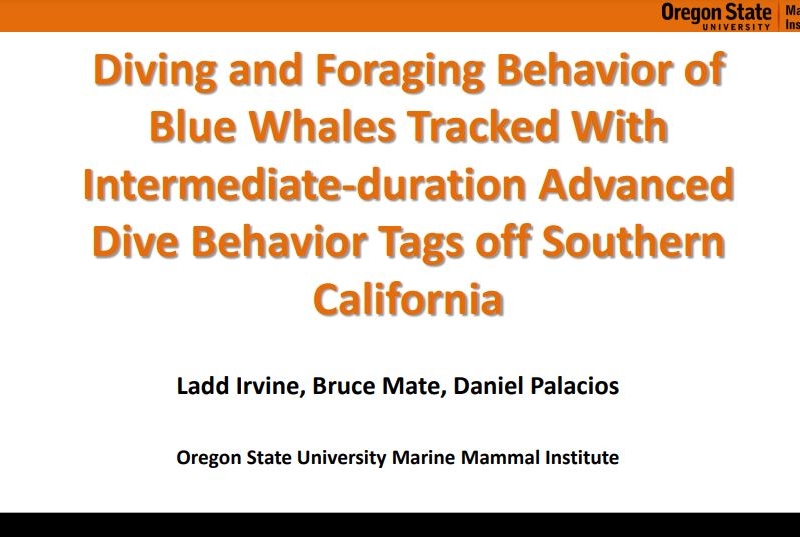
Blue and Fin Whale Satellite Tagging
Project Objectives
Determine the movement patterns, occurrence, and residence times of blue whales and fin whales within U.S. Navy training and testing areas as well as Biologically Important Areas along the U.S. West Coast
Complete
Conservation Canine for Marine Mammal Scat Collection in Hawaii
Project Objectives
Test whether a K9 can be trained to detect and 'direct' boat drivers via changes in behavior to the scat of marine mammals in Hawaii
Complete
Effectiveness of Navy Lookout Teams in Detecting Cetaceans
Project Objectives
Obtain data to characterize the potential exposure of marine mammals and ESA-listed marine species to Navy training and testing activities, evaluate the effectiveness of mitigation measures
Current
Estimation of Received Levels of MFAS and Behavioral Response of Marine Mammals at PMRF
Project Objectives
Further our understanding of the Monitoring Questions: 1) What is the occurrence and estimated received levels of MFAS on 'blackfish', humpback, minke, sperm and Blainville's beaked whales within the PMRF instrumented range? and 2) What, if any, are the short term behavioral responses of 'blackfish,' humpback, minke, sperm and Blainville's beaked whales when exposed to MFAS/explosions at different levels/conditions at PMRF?
Current
Goose-Beaked Whale and Fin Whale Population Dynamics and Impact Assessment at the Southern California Offshore Antisubmarine Warfare Range (SOAR)
Project Objectives
Improve knowledge of baseline population demographics, vital rates, and movement patterns of Cuvier’s beaked whales and fin whales. Examine what, if any, short term behavioral and/or vocal responses occur when exposed to sonar or explosions at different levels and conditions. Determine if exposure to sonar or explosives impact the long term fitness and survival of individuals or the population, species, or stock
Complete
Guadalupe Fur Seal Satellite Tracking
Project Objectives
Determine the at-sea distribution of endangered Guadalupe fur seals and whether they travel through or utilize the offshore waters of the Southern California Range Complex and Northwest Training and Testing area
Complete
Hawaiian Monk Seal Tagging
Project Objectives
Investigate potential impacts of naval activities on Hawaiian monk seals
Current
Long Term Acoustic Monitoring of Marine Mammals Utilizing the Instrumented Range at Pacific Missile Range Facility (PMRF)
Project Objectives
Improve understanding of the long term trends in occurrence of marine mammals (e.g., minke, humpback, fin, Bryde's, Blainville's) on the PMRF range. Examine what, if any, acoustic and physical behavioral responses occur to Navy activities.
Current
Marine Mammal Monitoring on Navy Ranges (M3R)
Project Objectives
Improve understanding of the long term trends in occurrence of marine mammals on the PMRF and SOAR ranges.
Current
Marine Mammal Sightings During CalCOFI Cruises
Project Objectives
Determine what species and populations of marine mammals are present in Southern California and estimate the abundance and density across seasons
Complete
North Pacific Humpback Whale Tagging
Project Objectives
Determine the occurrence, movement patterns, and residency patterns of multiple humpback whale Distinct Population Segments within Pacific Ocean Navy Range Complexes
Current
North Pacific Marine Mammal Species Distribution
Project Objectives
Develop a North Pacific-wide species distribution model for cetaceans
Current
Pacific Islands Comprehensive Stranding Investigations
Project Objectives
Conduct comprehensive investigations of stranded marine mammals throughout the Pacific Islands with emphasis on the Hawaiian and Mariana Island chains. This includes conducting necropsies of stranded animals, collecting and archiving samples, conducting disease screening, genetic testing, and analysis of historical data. The objective is to examine stranding patterns and causes of death for marine mammals in the Pacific Islands.
Complete
Pacific Islands Marine Mammal Stranding Diseases
Project Objectives
Determine cause of death when cetaceans strand to ensure accurate public understanding of stranding cause, with focus on infectious diseases
Current
Pacific Marine Assessment Program for Protected Species (PACMAPPS) survey
Project Objectives
Identify species of beaked whales, odontocetes, and baleen whales that occur in the surveyed areas; Monitor marine mammal and sea turtle presence, distribution, and diversity in offshore waters; Develop a better understanding of marine mammal distribution, movement patterns, habitat use, population structure, and abundance; Develop reference library of visually-validated acoustic recordings of marine mammals.
Complete
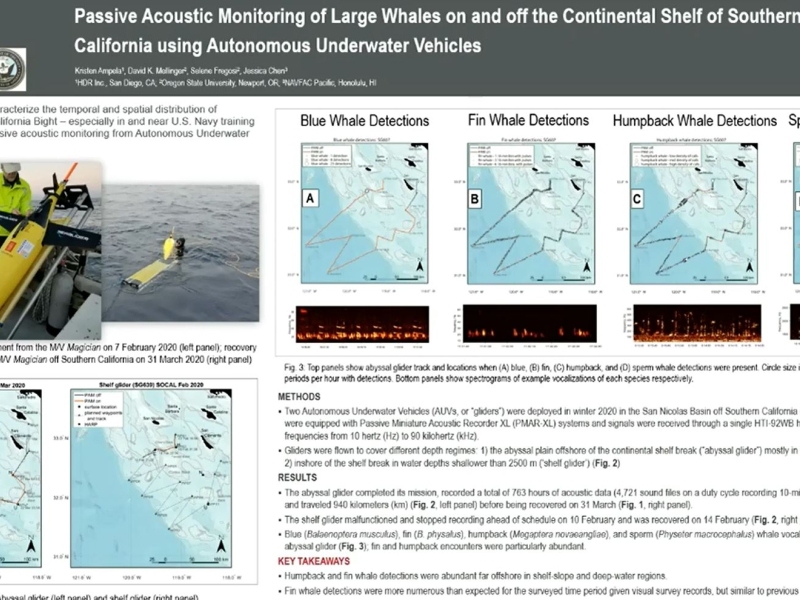
Passive Acoustic Monitoring of Marine Mammals Using Autonomous Underwater Vehicles in Southern California
Project Objectives
Explore presence of marine mammals in less-surveyed, offshore areas
Current
Pilot Project to Assess Feasibility of Multi-Sensor Tagging of Rough-Toothed Dolphins at the Pacific Missile Range Facility (PMRF)
Project Objectives
Determine feasibility and efficacy of deploying high resolution multi-sensor tags on rough-toothed dolphins at PMRF and determine how collected data can be used to move toward a better understanding of the effects of Navy activities, ultimately leading to PCoD modelling.
Current
Southern California Beaked Whale Occurrence (formerly "Passive Acoustic Monitoring of Marine Mammals in Southern California Range Complex (SOCAL)")
Project Objectives
Determine the distribution and temporal patterns of beaked whale occurrence in the waters within and outside the Southern California Range Complex (SOCAL). Use passive acoustic monitoring to determine what species are present in SOCAL and examine spatial and temporal patterns.
Current
Visual Survey and Tagging of Hawaiian Odontocetes
Project Objectives
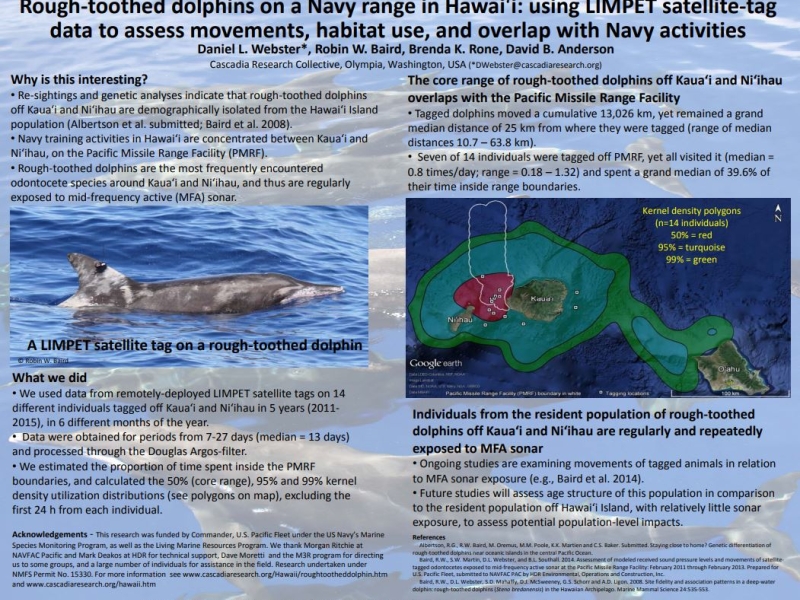
(1) define the spatial movement and habitat use patterns of species that are exposed to mid-frequency active (MFA) sonar (2) determine how these patterns influence exposure and potential responses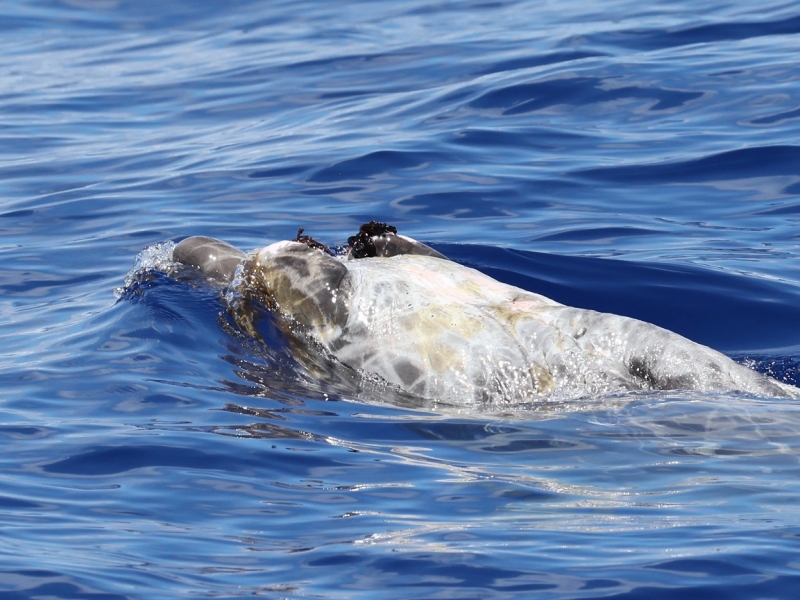
Kaua‘i field project - August 2026
August 25, 2026
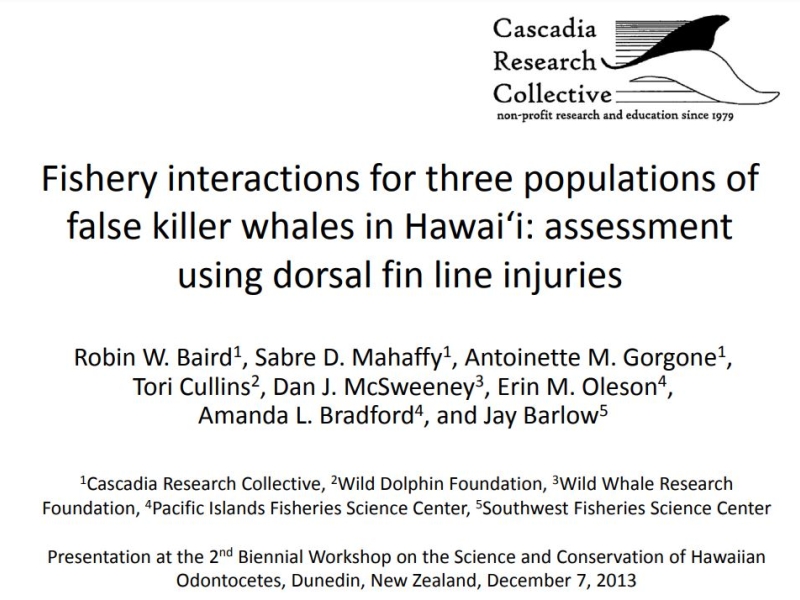
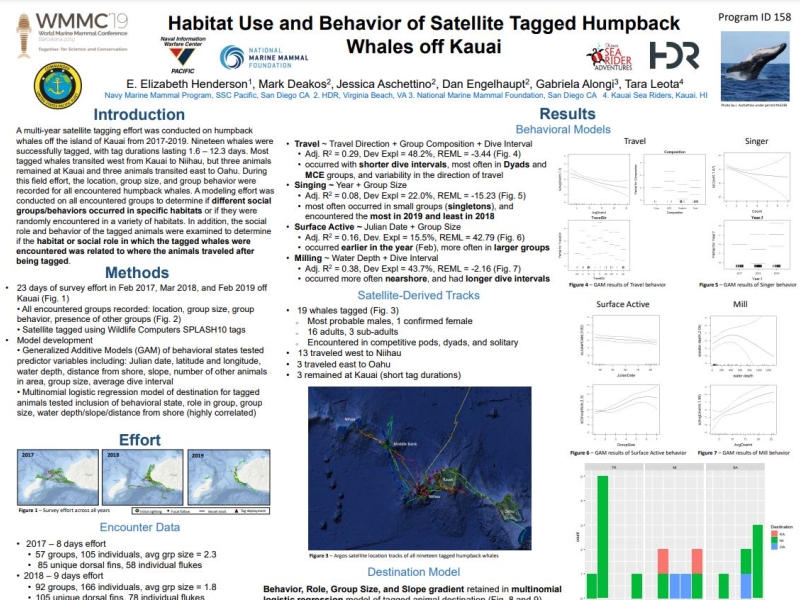
Researchers from Cascadia Research Collective are conducting a 9-day field session off Kaua'i to deploy LIMPET satellite tags on odontocete cetaceans prior to a Submarine Command Course (SCC) to be able to examine their behavior before, during, and after the training event. Click on the image below to see daily updates from the field.
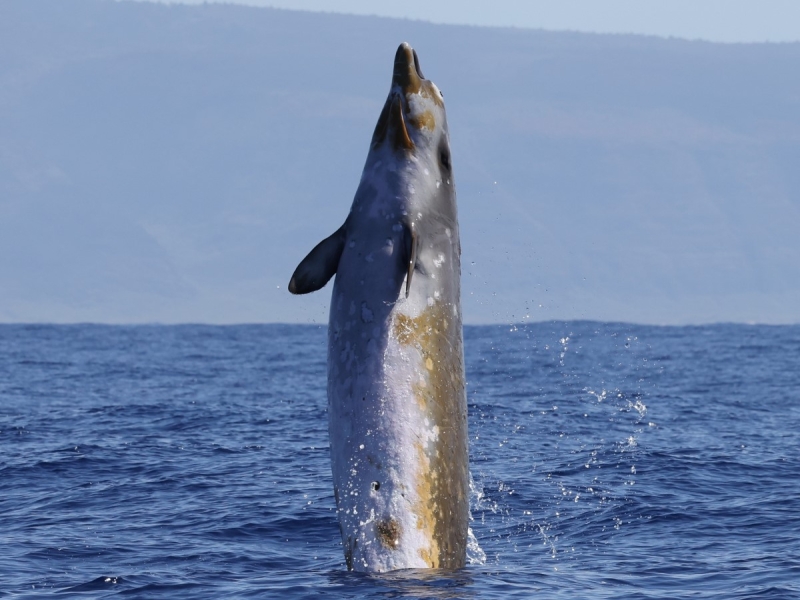
Kaua'i Field Work Updates
February 20, 2025
Scientists from Cascadia Research Collective recently completed a ~9-day field project off Kaua’i that started on February 9th. This project is timed to occur prior to a Submarine Command Course (SCC) training event. The primary goal is to deploy satellite telemetry tags on multiple species of odontocete cetaceans prior to the SCC, to be able to examine their behavior before, during, and after the event. This approach has been very successful in the past as a way of examining how different species respond to Navy training activities including mid-frequency active sonar (MFAS). Click through the picture below to see daily updates.
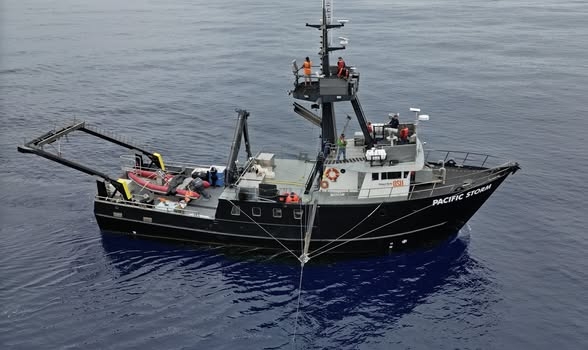
Mesoplodon mysterioso
June 13, 2024
We are thrilled to be part of the "Mystery Mesoplodon Expedition" off the west coast of Baja California searching for an elusive new species of beaked whale. Read about the initial discovery and stay tuned for updates on this exciting expedition!
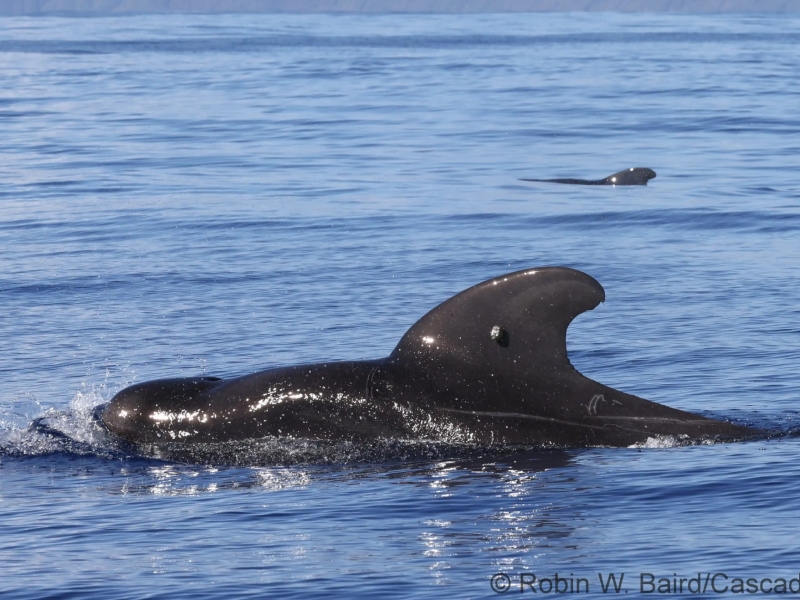
Kauai' Field Work Updates
February 16, 2024
Scientists from Cascadia Research Collective are leading a ~9-day field project off Kaua’i that started on February 11th.
August 2022 Kaua‘i Field Project
August 18, 2022
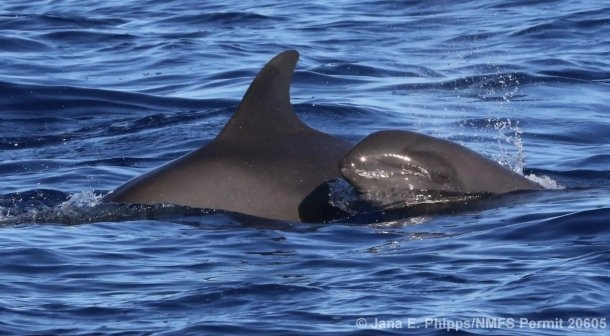
Cascadia Research Collective began an 8-10 day field project off Kaua’i starting on August 16th. This project is timed to occur prior to a Submarine Command Course (SCC). Their primary goal is to deploy LIMPET satellite tags on one or more species of odontocete cetaceans prior to the SCC, to be able to examine their behavior before, during, and after the SCC. This approach has been very successful in the past as a way of examining how different species respond to Navy training activities including mid-frequency active sonar.
Beaked whale distribution and seasonality in Southern California